
Karryn’s Prison Screenshots









Karryn’s Prison review
Explore the innovative mechanics, prison management systems, and strategic gameplay elements
Karryn’s Prison stands out as a uniquely designed indie title that seamlessly blends multiple gameplay genres into a cohesive experience. The game follows Karryn, who assumes the role of warden in a notorious all-male correctional facility. What makes this title particularly noteworthy is how its narrative and mechanical systems intertwine, creating a sophisticated gaming experience that goes beyond surface-level design. Players manage prison operations while navigating complex character progression systems, making strategic decisions that directly impact both gameplay outcomes and story development. This guide explores the innovative mechanics, gameplay systems, and design philosophy that have earned the game recognition within the indie gaming community.
Core Gameplay Systems & Mechanics
What hits you first when you boot up Karryn’s Prison isn’t just the striking art style, but the sudden, thrilling weight of responsibility. You’re not just playing a warden; you are the administrator of a chaotic, crumbling facility, and every decision ripples through your daily routine. This game masterfully blends genres into something wholly unique, creating a sandbox prison simulation where your management choices directly fuel your personal power—and potential downfall. The core loop is ingeniously simple yet deeply complex: manage your prison by day to empower Karryn for the challenges she’ll face by night. It’s this seamless fusion of prison management game systems and personal JRPG progression that defines the entire experience.
Let’s dive into the intricate clockwork that makes this game tick. From balancing books and inmate moods to navigating a turn-based combat system where your stats are your most valuable currency, every system is interconnected. Understanding these Karryn’s Prison gameplay mechanics is the key to not just surviving, but truly mastering your penitentiary and crafting your own story within its walls.
Prison Management & Resource Systems
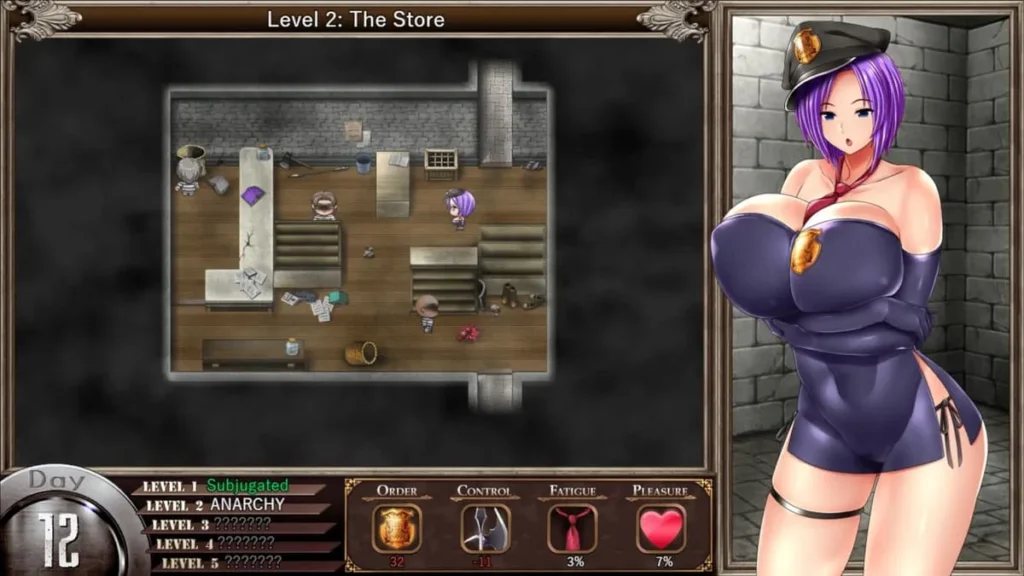
Forget static spreadsheets or boring build menus. The prison in Karryn’s Prison is a living, breathing—and often rebelling—entity. This isn’t a backdrop; it’s the engine room of the entire game. Your success in every other area, from combat to character growth, is entirely dependent on how well you run this chaotic operation. The prison management game systems here are all about dynamic cause and effect.
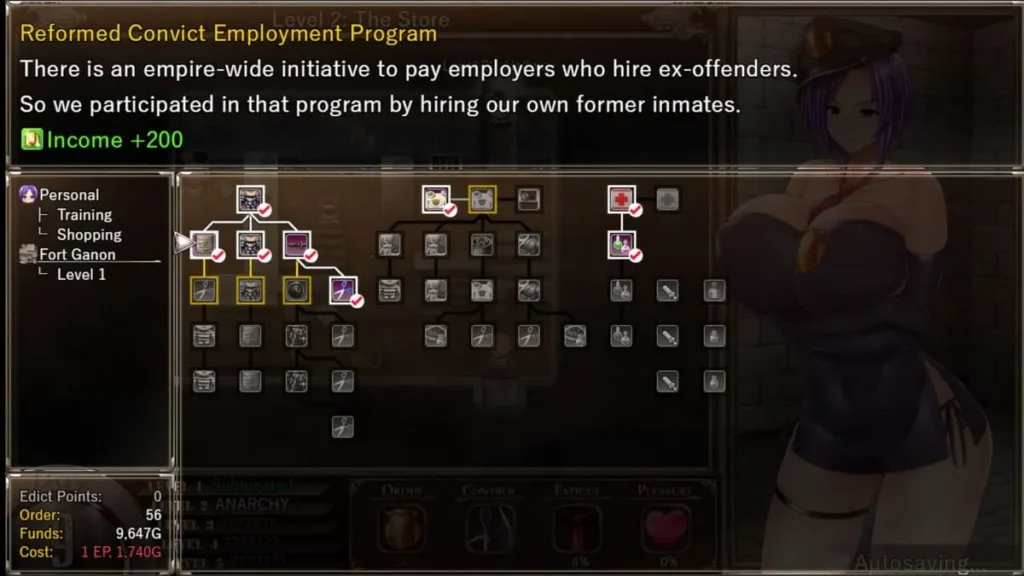
You start with a bare-bones facility and a handful of inmates. Your core resources are Money, Food, and the inmates’ Labor. Every day, you must assign inmates to work details: cooking in the kitchen, crafting in the workshop, or performing “services” to generate income. Here’s where the genius of the indie game design mechanics shines: every assignment has a risk-reward calculus. Assign an inmate to a hard labor job, and they might become stressed or rebellious, potentially causing incidents. But that job also generates more resources. It’s a constant, engaging tug-of-war.
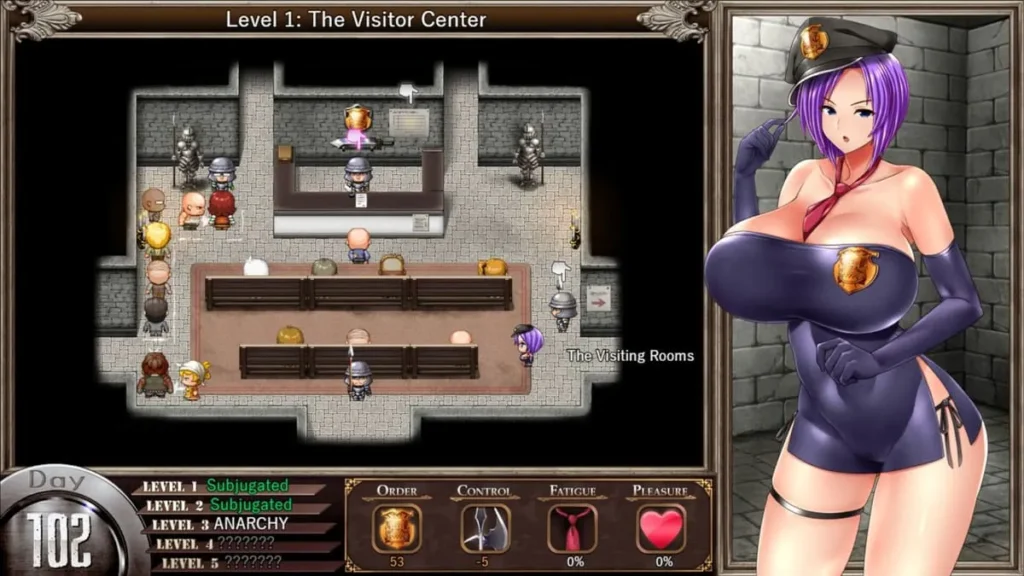
The facility itself grows with you. You’ll build new rooms like a Gym to improve inmate stats (making them better workers… or more formidable opponents), an Infirmary to treat injuries, or even recreational rooms to keep morale in check. The UI is brilliantly intuitive, presenting all this information in a clean, accessible way that never overwhelms. You can see at a glance which inmates are unhappy, what resources are running low, and where your bottlenecks are. This smooth gameplay flow is crucial because you’re always planning several steps ahead.
Pro Tip from My Playthrough: Don’t just build what seems cool! Early on, I poured money into a fancy cafeteria and my budget tanked. Focus on building a steady, sustainable economy first. A solid Workshop for crafting sellable goods and a secure Kitchen are your foundational pillars. Think of your prison as a business—because it is!
The true sandbox nature comes from your agency. Want to run a brutal, oppressive prison focused on maximum output? You can, but be prepared for constant fights and escapes. Prefer a more rehabilitative, cushy approach? That’s viable too, though your income will be slower. This sandbox prison simulation gives you the tools and then steps back, allowing your personal management style to directly shape the world and the challenges Karryn faces. Your prison’s daily reality is the bedrock of all Karryn’s Prison gameplay mechanics.
To visualize how these core systems interact and support each other, let’s break them down:
| Core System | Key Mechanics | Direct Player Impact | Primary Progression Reward |
|---|---|---|---|
| Prison Management | Inmate Assignment, Facility Construction, Resource Allocation (Money/Food/Labor), Morale & Discipline Monitoring | Directly controls the flow of Money and Items, which are used for everything else. Determines the frequency and difficulty of prison incidents. | Unlocks new buildings, upgrades, and a stable supply of items/currency to fuel other systems. |
| Character Progression | Stat Leveling (STR, VIT, DEX, etc.), Skill Acquisition, Corruption Gain/Loss, Equipment Management | Defines Karryn’s capabilities in and out of combat. A high-Corruption build plays fundamentally differently from a low-Corruption one. | New combat abilities, dialogue options, and ways to interact with the prison world. Unlocks narrative branches. |
| Combat & Encounters | Turn-Based Action Selection, Stamina Management, Weakness Targeting, Post-Fight “Negotiation” Choices | Resolves prison incidents (fights, rebellions). The primary method for gaining EXP, unique items, and influencing Corruption. | Level Ups, rare equipment, Corruption shifts, and progressing specific inmate storylines. |
Character Progression & Corruption Mechanics
If prison management is the game’s body, then Karryn’s personal progression is its soul and its most daring innovation. This is where traditional JRPG gameplay elements collide with a bold, narrative-driven system unlike any other. You don’t just gain Experience Points (EXP) and level up stats like Strength, Vitality, and Dexterity; you also navigate a delicate, all-defining meter: Corruption.
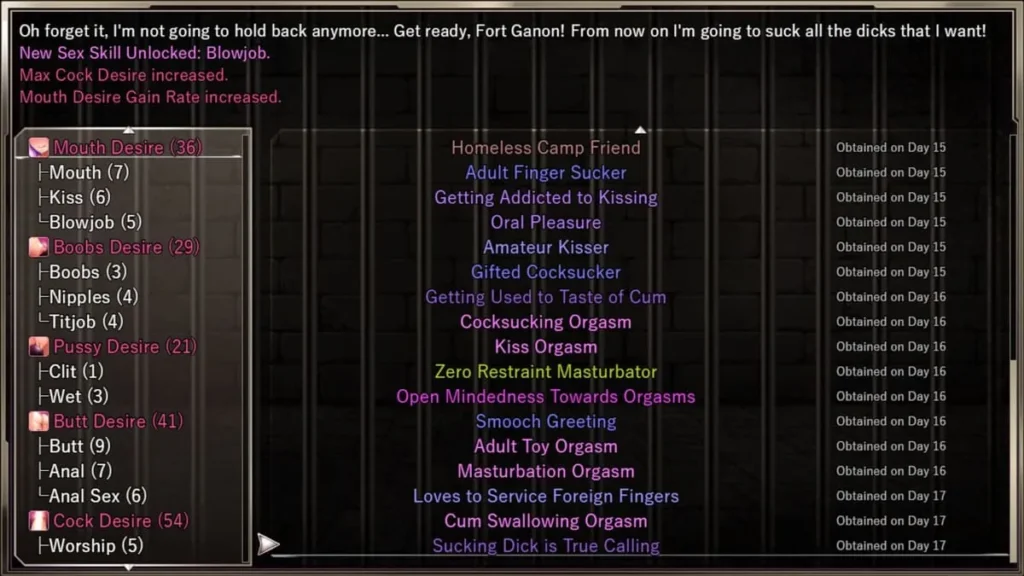
Let’s be clear: Corruption is not a “bad” meter. It’s a reflection of Karryn’s mental and physical state, influenced by every significant choice you make. Lose a fight in a certain way? Corruption might rise. Choose a harsh dialogue option with an inmate? Corruption might rise. Use particular items or skills? You guessed it. Conversely, winning fights decisively, choosing principled dialogue, and using certain facilities can reduce it. This character corruption mechanic is the brilliant core around which every other Karryn’s Prison gameplay mechanic orbits.
Why does it matter so much? 🤔 Because Corruption statically changes everything:
* Skills & Combat Style: Many powerful skills are locked behind higher Corruption levels. A low-Corruption Karryn might rely on disciplined martial arts, while a high-Corruption Karryn unlocks more chaotic, overwhelming abilities. Your entire tactical approach evolves with your Corruption.
* Dialogue & Story Beats: Inmates and other characters will react to you differently. High Corruption can unlock intimidating or seductive paths through conversations, while low Corruption opens up respectful or authoritative ones. This makes every playthrough narratively unique.
* Passive Effects & “Assists”: This is a subtle but masterful system. As events happen, Karryn can gain persistent passive effects—both positive and negative. More intriguing are the “Assists,” where inmates may intervene in or out of combat based on your relationship with them. A well-treated inmate might jump in to help you in a fight, while a neglected one might make things worse. Your management choices have a direct, personal consequence.
Here are the key features of the corruption system and how your choices shape the game:
- A Dynamic Stat, Not a Moral Judgement: The game doesn’t punish you for high or low Corruption; it offers different tools and challenges. A high-Corruption run is often easier in combat but harder in management, creating a natural difficulty balance.
- Player Choice is Absolute: Every major interaction presents a choice that can affect Corruption. Do you extract information harshly or patiently? Do you accept a dubious “gift” from an inmate? You are constantly steering Karryn’s path.
- Deeply Integrated with Progression: You can’t max out every stat. You must choose whether to invest in Corruption-locked skills or pure stat boosts. This creates meaningful, permanent build diversity.
- Narrative Device: The Corruption meter is the physical manifestation of Karryn’s story. Watching it fluctuate based on your decisions makes the narrative feel immediate and personal.
In my first playthrough, I fought desperately to keep Corruption low, thinking it was the “right” way to play. I struggled in some battles but had an iron grip on prison discipline. On my second run, I embraced a different path, and the game transformed into a power fantasy with entirely new strategic depth. This level of agency is the hallmark of brilliant indie game design mechanics.
JRPG Elements & Combat Integration
So, you’ve managed your resources and shaped Karryn’s character. How does it all come to a head? Through a slick, strategic turn-based combat system that is perfectly woven into the fabric of prison life. Encounters aren’t random; they’re the direct result of your management. An inmate’s morale breaks, a fight erupts in the cafeteria, or a planned rebellion comes to a head—and you’re thrust into a battle grid.
Combat is deceptively deep. You have a Stamina pool that fuels your actions, from basic attacks and powerful skills to guard maneuvers. Each enemy (inmate) has strengths and weaknesses, encouraging you to tailor your approach. The JRPG gameplay elements are fully present here: you’re monitoring health bars, managing cooldowns, and aiming for tactical advantages. But the genius twist comes after the fight.
Once you’ve reduced an opponent’s will, you enter a “negotiation” phase. Here, you choose how to deal with the subdued inmate. You can punish them (affecting prison morale, maybe gaining a temporary buff), recruit them for a favor (gaining a useful item or assistance), or even pursue a more intimate resolution (which heavily influences Corruption and relationship status). This moment perfectly encapsulates the game’s fusion of systems: a combat result directly feeds back into prison management and character progression.
The equipment and crafting system further ties everything together. Weapons and armor aren’t just found; they’re often crafted from materials produced by your prison workshop. That powerful new baton? You had to assign an inmate to the workshop to produce the components. Your success in combat is literally built by your success as a manager.
This intricate balancing act is why the game’s scope feels so perfect. A focused playthrough on an easier difficulty can take around 12 hours, which is just the right amount of time to experience a complete narrative arc, explore a solid range of builds, and feel the satisfying cycle of management and combat without it becoming repetitive. The game introduces its prison management game systems and character corruption mechanics gradually, ensuring you’re never overwhelmed by the sheer number of levers you can pull.
Ultimately, Karryn’s Prison stands as a testament to creative, integrated design. It proves that deep management sims, personal character-driven narratives, and tactical combat can exist not just side-by-side, but in a constant, thrilling dialogue. Every choice matters, every system supports another, and every playthrough writes a different story. It’s a deeply engaging sandbox prison simulation that respects your intelligence and rewards your creativity at every turn.
Karryn’s Prison demonstrates how indie developers can create sophisticated gaming experiences by thoughtfully integrating multiple mechanical systems. The game’s strength lies in its seamless blend of prison management, character progression, and JRPG mechanics, all unified through a narrative-driven corruption system that gives player choices meaningful consequences. The design philosophy prioritizes player agency, allowing decisions to shape both gameplay progression and story outcomes. Whether you’re drawn to strategic management gameplay, character-driven narratives, or innovative indie design, Karryn’s Prison offers a polished and engaging experience that rewards exploration and experimentation. The game’s critical reception within the gaming community reflects its successful execution of complex systems that work in harmony rather than competition, creating a memorable and distinctive gaming experience.