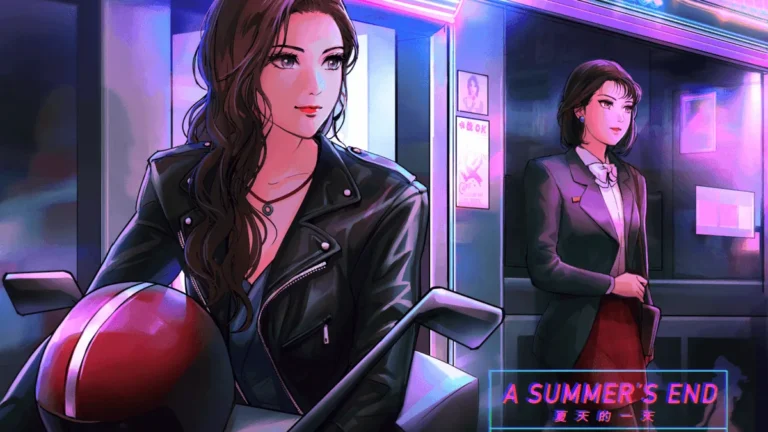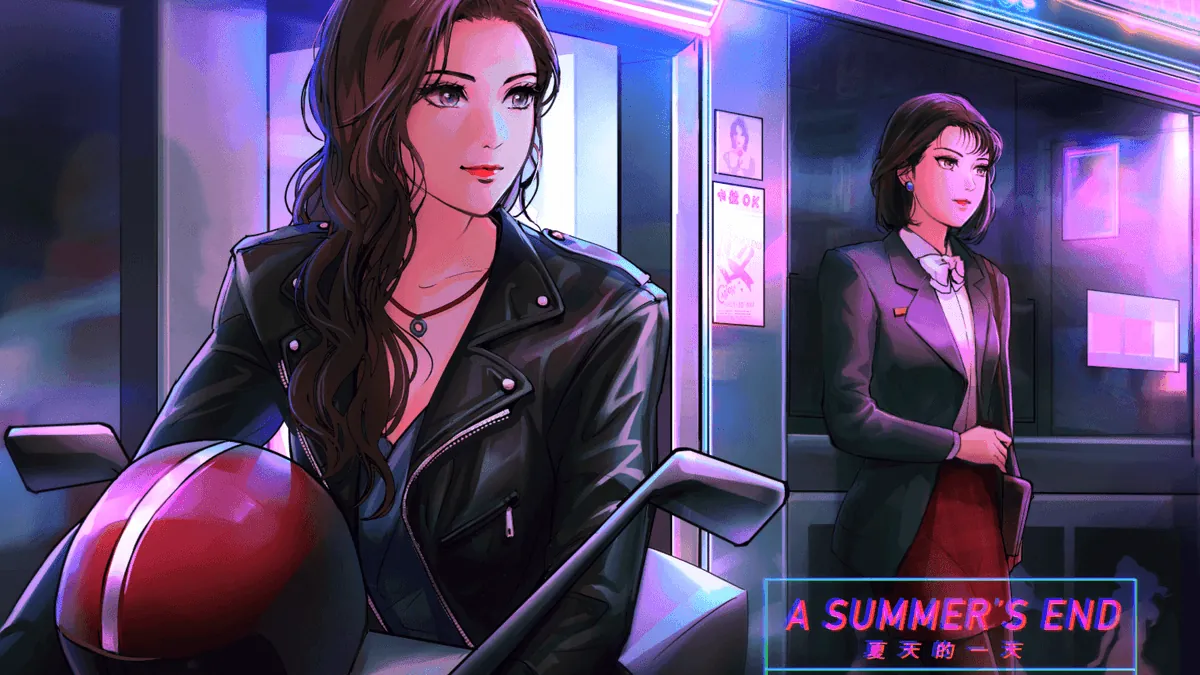
A Summer’s End – Hong Kong, 1986
Play A Summer’s End – Hong Kong, 1986
A Summer’s End – Hong Kong, 1986 Screenshots






A Summer’s End – Hong Kong, 1986 review
What is A Summer’s End – Hong Kong, 1986
A Summer’s End – Hong Kong, 1986 is a lesbian visual novel developed by Oracle and Bone. Set against the conservative social norms of 1980s Asia, the game follows a young woman’s emotional and romantic awakening. Version 1.3 represents the current build, featuring refined dialogue trees, updated artwork, and two distinct endings that depend on the choices you make throughout the story.
The title stands out for its realistic portrayal of same-sex attraction within a strict cultural framework. Players guide Michelle through a series of decisions that test her values, family expectations, and personal desires. The narrative draws clear inspiration from Asian cinema of the period, delivering measured pacing and authentic emotional conflict rather than exaggerated drama.
Story and Characters
The plot unfolds in late summer Hong Kong, 1986. Michelle appears to lead a perfect life: she is attractive, well-mannered, and respected by her traditional family. Her routine shatters the moment she encounters Sam, a confident, independent entrepreneur who openly rejects societal conventions. Their initial meetings evolve into deeper conversations that force Michelle to confront her own suppressed feelings.
Throughout the story the two women gradually reveal their vulnerabilities. Michelle must weigh her cultural upbringing and family obligations against the genuine attraction she feels for Sam. The writing avoids clichés, instead focusing on quiet moments of realization, subtle gestures, and the weight of unspoken rules in 1980s Hong Kong society.
Key Supporting Figures
- Michelle’s conservative parents, whose expectations create constant pressure
- Colleagues at the modeling agency who gossip about any deviation from expected behavior
- Sam’s circle of friends, who represent an alternative lifestyle Michelle has never considered
The game presents two separate endings. One aligns with traditional values while the other embraces personal authenticity. Both conclusions feel earned and avoid simplistic moralizing.
Gameplay and Mechanics
A Summer’s End – Hong Kong, 1986 operates as a choice-driven visual novel. Players advance the story by selecting dialogue options and deciding how Michelle responds in critical social situations. Every major decision influences relationship meters, future scenes, and which ending becomes available.
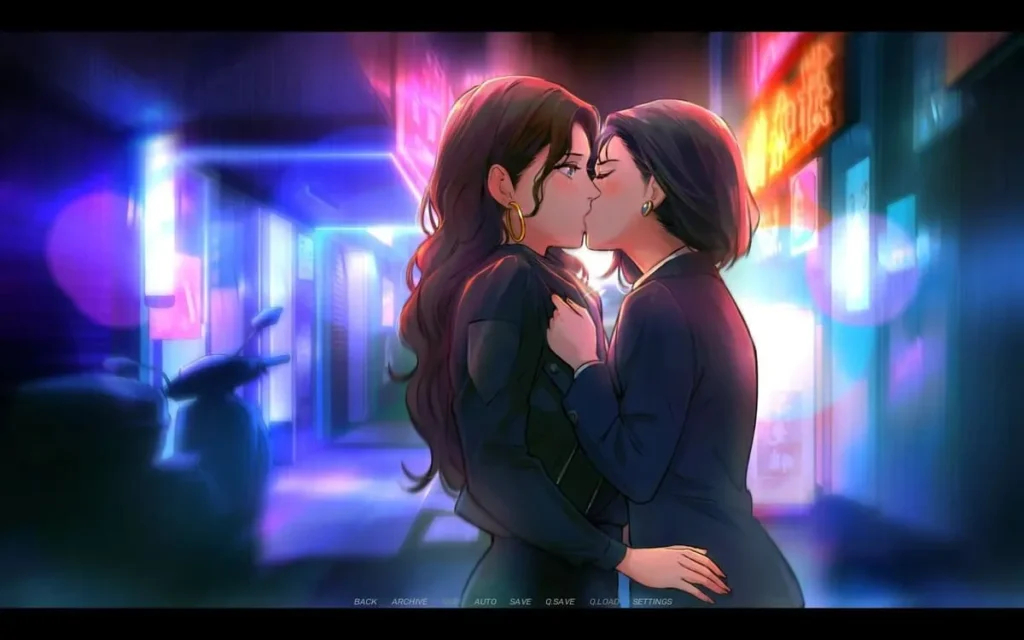
The mechanics remain straightforward yet precise. The interface displays character portraits, location backgrounds, and a text box. A log function lets players review previous dialogue. Save slots allow returning to pivotal choice points without replaying entire sections. Version 1.3 improved the pacing of choice presentation and added clearer visual feedback when relationship values change.
No timing challenges or quick-time events appear. The focus stays entirely on narrative branching and character development. Replay value comes from testing different attitudes toward family duty versus personal happiness.
Visuals, Audio and Production Quality
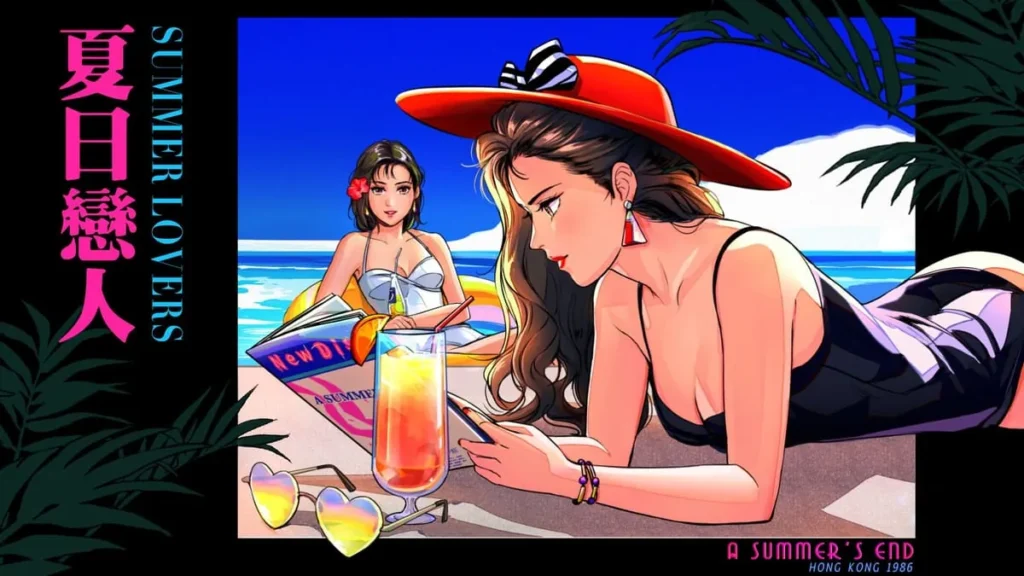
The artwork captures the fashion, hairstyles, and urban environments of 1986 Hong Kong with striking accuracy. Character designs reflect both the conservative dress codes of the time and the subtle ways Sam defies them. Backgrounds include detailed street scenes, modest apartments, and neon-lit nighttime locations that reinforce the era.
Illustrations change smoothly during key emotional beats, and the game uses limited animation to emphasize important gestures. The color palette favors warm sunset tones and cool office lighting, matching the late-summer setting. All character sprites maintain consistent proportions and style across the 1.3 build.
Background music blends period-appropriate synth tracks with softer piano pieces during intimate conversations. Sound effects remain minimal, allowing the soundtrack and voice-like text presentation to carry the atmosphere. The overall production feels cohesive and carefully researched rather than generic.
| Specification | A Summer’s End – Hong Kong, 1986 | Typical Lesbian Visual Novel |
|---|---|---|
| Setting | Hong Kong, 1986 | Modern fantasy or school setting |
| Number of Endings | 2 | 3-6 |
| Art Style | Realistic 80s Asian cinema influence | Anime-inspired |
| Choice Impact | Strong effect on final outcome | Often cosmetic |
| Developer | Oracle and Bone | Varies |
How to Play A Summer’s End – Hong Kong, 1986 Online
Many adult game portals now host A Summer’s End – Hong Kong, 1986 directly in browser. No download is required if you choose a compatible site that supports HTML5 visual novels. Simply navigate to the game page, click play, and the title loads within seconds. Progress saves automatically through the hosting platform’s cloud system, allowing you to continue from any device.
For those who prefer offline play, version 1.3 remains available as a downloadable package. Browser versions usually run the same 1.3 build with identical choices and artwork. Ensure your browser permits local storage if you want to keep multiple save files during extended sessions.
Who Should Play A Summer’s End – Hong Kong, 1986
This visual novel suits players who value strong writing and cultural specificity over fast-paced action or explicit content volume. Fans of thoughtful lesbian stories with genuine emotional stakes will find the narrative rewarding. The game particularly appeals to those interested in 1980s Asian settings and the tension between personal desire and societal expectation.
Players who enjoy multiple endings and meaningful choice systems will appreciate the branching paths. Those seeking simple escapism or heavy erotic scenes may find the measured pace and focus on internal conflict less engaging. The title works best for adults looking for a mature, well-crafted story that treats its characters with respect.
A Summer’s End – Hong Kong, 1986 continues to stand out among lesbian visual novels for its historical accuracy, restrained storytelling, and emotional honesty. Whether played online in browser or downloaded for offline sessions, the game delivers a distinct experience that lingers long after the final credits.